
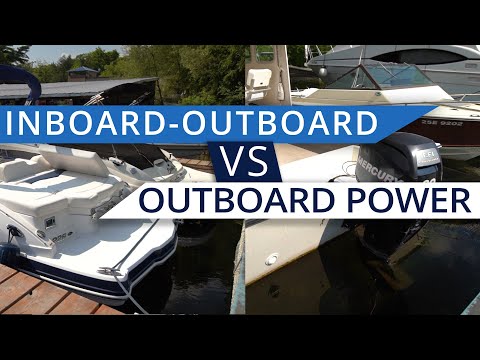
Outboard and inboard boat engines are two different types of propulsion systems commonly used in boats. Each type has its own unique characteristics and advantages. If you’re in the market for a boat or just curious about the differences, then this blog post is for you! As an authority on the subject, I’m here to provide you with a highly detailed breakdown of the distinctions between outboard and inboard boat engines.
1. Location:
One of the most obvious differences between outboard and inboard engines is their location on the boat. Outboard engines are mounted on the transom, or rear, of the boat. They are self-contained units that consist of an engine, gearbox, and propeller. In contrast, inboard engines are located inside the hull of the boat, typically towards the center or rear. They are connected to the propeller via a driveshaft and are often enclosed in a compartment known as the engine room.
2. Power and Performance:
In terms of power and performance, outboard engines tend to be more versatile. They are available in a wide range of sizes and horsepower options, allowing boat owners to choose the right amount of power for their specific needs. Outboard engines are also known for their maneuverability, as they can be tilted or rotated to steer the boat in any direction. On the other hand, inboard engines are generally larger and more powerful, making them suitable for larger boats that require more thrust. They offer better handling in rough water conditions and are often preferred for activities such as water skiing or wakeboarding.
3. Maintenance and Accessibility:
Outboard engines are known for their ease of maintenance and accessibility. Since they are mounted on the transom, they can be easily accessed for repairs or maintenance tasks. Additionally, outboard engines have self-contained cooling systems, which means they don’t rely on the boat’s water intake for cooling. This reduces the risk of overheating and simplifies maintenance procedures. In contrast, inboard engines are typically more challenging to access, as they are located inside the boat’s hull. Maintenance tasks may require crawling into tight spaces or removing components to reach the engine. However, advancements in design have made inboard engines more accessible in recent years.
4. Fuel Efficiency:
When it comes to fuel efficiency, outboard engines have an edge. Due to their smaller size and lighter weight, outboard engines consume less fuel compared to inboard engines. This is especially noticeable at lower speeds and during idle periods. Inboard engines, although generally less fuel-efficient, have the advantage of larger fuel tanks, allowing for longer trips without refueling.
5. Noise and Vibration:
Outboard engines are generally quieter and produce less vibration compared to inboard engines. The location of the engine on the transom, away from the cabin, helps minimize noise and vibration. This can significantly enhance the overall boating experience, especially during long trips or when spending extended periods on the water. Inboard engines, on the other hand, are closer to the living spaces inside the boat, which can result in more noticeable noise and vibration.
6. Cost and Versatility:
Outboard engines are typically less expensive upfront compared to inboard engines. They are also easier to replace or upgrade, as they can be simply unbolted from the transom and replaced with a new unit. This makes outboard engines a more cost-effective option for boat owners who may want to upgrade their engine in the future. Inboard engines, although pricier, offer more versatility in terms of boat design. Since the engine is located inside the hull, it frees up space on the transom, allowing for various seating arrangements or storage options.
In conclusion, the differences between outboard and inboard boat engines are significant and should be carefully considered when choosing a boat. Outboard engines provide versatility, ease of maintenance, and fuel efficiency, while inboard engines offer power, performance, and boat design flexibility. Ultimately, the choice will depend on your specific boating needs and preferences.
Decoding the Debate: Inboard vs. Outboard Motors – Which Reigns Supreme?
Decoding the Debate: Inboard vs. Outboard Motors – Which Reigns Supreme?
Are you in the market for a new boat or considering upgrading your current one? One of the key decisions you’ll need to make is whether to go with an outboard or inboard motor. These two types of boat engines have distinct differences that can greatly impact your boating experience. In this article, we will delve into the details of each type, exploring their pros and cons, so you can make an informed decision.
1. Power and Performance:
– Outboard motors: These motors are mounted on the transom of the boat and are known for their exceptional maneuverability. They offer quick acceleration, making them ideal for activities like water skiing and wakeboarding. Outboards also provide better weight distribution, which can enhance stability and handling.
– Inboard motors: These motors are located inside the boat’s hull, typically in the center. They offer increased torque and are known for their smooth and quiet operation. Inboards are favored by those who value comfort and pleasure cruising. They are also more suitable for larger boats that require more power.
2. Maintenance and Accessibility:
– Outboard motors: One of the major advantages of outboards is their accessibility. They can be easily removed and serviced, making maintenance a breeze. Additionally, outboards have their own fuel tanks, eliminating the need for complicated fuel systems. However, they may require more frequent maintenance due to their exposure to the elements.
– Inboard motors: Inboards are generally more challenging to access for maintenance and repairs due to their location within the boat’s hull. However, they tend to be more durable and require less frequent maintenance. Additionally, inboard motors are often equipped with closed cooling systems, which prolongs their lifespan by preventing corrosion.
3. Fuel Efficiency and Economy:
– Outboard motors: Outboards have made significant advancements in recent years, becoming more fuel-efficient. They offer great fuel economy at lower speeds, making them a cost-effective choice for long-distance cruising. However, at high speeds, their fuel consumption tends to increase.
– Inboard motors: Inboards are typically more fuel-efficient at higher speeds, making them a favorable choice for those who enjoy faster cruising. However, at lower speeds, they may consume more fuel compared to outboards.
4. Space and Versatility:
– Outboard motors: Outboards take up less space within the boat, allowing for more interior space and storage. They also offer the flexibility of tilting the motor out of the water, making them suitable for navigating shallow waters. This versatility is particularly advantageous for fishing enthusiasts.
– Inboard motors: Inboards take up more space within the boat due to their location. However, this can be advantageous for those who prioritize a spacious deck and cabin. Inboard motors also allow for a smoother ride, as they are positioned closer to the boat’s center of gravity.
In conclusion, the choice between an outboard and inboard motor ultimately depends on your specific boating needs and preferences. If you prioritize maneuverability, quick acceleration, and easy maintenance, an outboard motor may be the best choice for you. On the other hand, if you value comfort, smooth operation, and prefer a larger boat, an inboard motor may be more suitable. Take your time to weigh the pros and cons of each type, and consult with experts or fellow boaters to make the best decision for your boating adventures.
The Hidden Drawbacks of Inboard Motors Revealed: Unveiling the Disadvantages
The Hidden Drawbacks of Inboard Motors Revealed: Unveiling the Disadvantages
1. Limited maneuverability: Inboard boat engines are typically located within the hull of the boat, making them less maneuverable compared to outboard motors. The fixed position of inboard engines restricts the boat’s ability to turn sharply and navigate through tight spaces. This can be a significant disadvantage when operating in crowded marinas or navigating narrow waterways.
2. Higher maintenance costs: Inboard motors are known to have higher maintenance costs compared to their outboard counterparts. Due to their complex design and integration with the boat’s hull, servicing and repairing inboard engines can be more time-consuming and expensive. Additionally, accessing certain components of the inboard motor may require dismantling parts of the boat, which adds to the overall maintenance expenses.
3. Increased fuel consumption: Inboard motors tend to consume more fuel compared to outboard engines. The placement of the inboard motor within the hull can create additional drag, leading to increased fuel consumption. This can be a concern for boaters who prioritize fuel efficiency and want to maximize their time on the water without frequent refueling.
4. Limited accessibility for maintenance: Unlike outboard motors that can be easily accessed and serviced from the transom of the boat, inboard motors often require lifting the deck or removing other components to reach certain areas. This limited accessibility can make routine maintenance tasks, such as oil changes or spark plug replacements, more challenging and time-consuming.
5. Higher initial cost: Inboard motors generally come with a higher initial cost compared to outboard engines. The complex design, integration with the boat’s hull, and the need for additional components (such as propeller shafts and transmissions) contribute to the higher price tag. This can be a deterrent for boaters on a budget or those looking for a more cost-effective option.
6. Limited shallow water capability: Inboard motors are not well-suited for navigating in shallow waters. The placement of the motor within the hull makes it more vulnerable to damage from underwater obstructions. Additionally, the deep draft of boats with inboard motors limits their ability to venture into shallow areas, restricting access to certain fishing spots or scenic locations.
7. Difficulty in emergency situations: In emergency situations, such as engine failure or overheating, inboard motors can pose additional challenges. Unlike outboard motors that can be easily removed or replaced, repairing or replacing an inboard motor may require professional assistance and specialized equipment. This can result in longer downtime and potential safety risks if immediate action is needed.
8. Increased weight and decreased performance: Inboard motors are generally heavier than outboard engines, which can affect the overall performance of the boat. The added weight can result in slower acceleration, reduced top speed, and decreased fuel efficiency. Boaters who prioritize speed and agility may find inboard motors less suitable for their needs.
9. Limited tilt and trim functionality: Inboard motors lack the tilt and trim functionality commonly found in outboard engines. Tilt and trim allows boaters to adjust the angle of the motor to optimize performance and maneuverability. The absence of this feature in inboard motors can limit the ability to adapt to changing water conditions and may result in suboptimal performance in certain situations.
10. Limited storage space: The placement of inboard motors within the hull can reduce the available storage space on the boat. The engine compartment takes up valuable space that could be used for storing equipment, supplies, or personal belongings. This limitation can be a drawback for boaters who require ample storage space for their recreational activities or extended trips on the water.
In conclusion, while inboard motors have their advantages, it is essential to consider these hidden drawbacks before making a decision. Factors such as maneuverability, maintenance costs, fuel consumption, accessibility, initial cost, shallow water capability, emergency situations, performance, tilt and trim functionality, and storage space should all be carefully evaluated to ensure the right choice for your boating needs.
The Rising Trend: Unveiling the Reasons behind Boats’ Shift Towards Outboard Motors
The Rising Trend: Unveiling the Reasons behind Boats’ Shift Towards Outboard Motors
Are you curious about the increasing popularity of outboard motors in boats? Wondering why more and more boat owners are opting for this type of engine? Let’s delve into the key differences between outboard and inboard boat engines to understand the reasons behind this rising trend.
1. Versatility and Maneuverability:
Outboard motors offer unparalleled versatility and maneuverability compared to their inboard counterparts. Unlike inboard engines that are fixed within the hull, outboard motors are mounted on the transom of the boat, allowing for easy tilting and steering. This flexibility enables boat owners to navigate through shallow waters, narrow channels, and tight spaces with ease. Whether you’re fishing, waterskiing, or cruising, the agility of an outboard motor provides a smoother and more enjoyable boating experience.
2. Space Optimization and Maintenance:
With an outboard motor, boat owners can optimize the available space on their vessel. Since the engine is mounted externally, it frees up valuable space within the boat for storage, seating, and other amenities. Additionally, outboard motors are easier to access and maintain. Routine maintenance tasks, such as oil changes and spark plug replacements, can be performed without the need for specialized tools or extensive disassembly. This convenience saves both time and money, making outboard motors a preferred choice for boat owners seeking hassle-free maintenance.
3. Fuel Efficiency and Eco-friendliness:
Outboard engines have come a long way in terms of fuel efficiency and environmental impact. Modern outboard motors feature advanced technologies, such as direct fuel injection and variable valve timing, which optimize fuel consumption and reduce emissions. This not only translates into cost savings for boat owners but also contributes to a cleaner and greener boating experience. The shift towards outboard motors reflects the growing awareness and commitment to eco-friendly practices within the boating community.
4. Power and Performance:
Outboard motors have also witnessed significant advancements in terms of power and performance. Today, you can find outboard engines that deliver impressive horsepower, allowing boats to reach higher speeds and handle heavier loads. Whether you’re a recreational boater or a professional angler, the increased power offered by outboard motors opens up a world of possibilities on the water. Furthermore, many outboard engines now come with innovative features like electronic throttle and shift control, enhancing precision and responsiveness in maneuvering the boat.
5. Resale Value and Accessibility:
Last but not least, the rising trend towards outboard motors can be attributed to their favorable resale value and accessibility. Due to their popularity, outboard-powered boats tend to hold their value better in the used boat market. Additionally, with a wide range of outboard motor manufacturers and models available, boat owners have greater accessibility to support, spare parts, and service centers. This accessibility and aftermarket support further contribute to the appeal and practicality of outboard motors.
In conclusion, the shift towards outboard motors in the boating industry can be attributed to their versatility, maneuverability, space optimization, ease of maintenance, fuel efficiency, power, resale value, and accessibility. As boat owners seek enhanced performance, convenience, and eco-friendliness, outboard motors have emerged as the preferred choice for a growing number of enthusiasts. So, if you’re considering a new boat or contemplating an engine upgrade, it’s worth exploring the benefits of an outboard motor for an exceptional boating experience.
In conclusion, understanding the differences between outboard and inboard boat engines is essential for boat owners and enthusiasts. Outboard engines are versatile and easy to install, making them popular for smaller boats and those looking for portability. On the other hand, inboard engines provide more power and are better suited for larger vessels and activities such as waterskiing and wakeboarding. Both types of engines have their advantages and disadvantages, so it ultimately comes down to personal preference and the specific needs of the boat owner.
**Frequently Asked Questions:**
**1. Can I convert an outboard engine to an inboard engine?**
Converting an outboard engine to an inboard engine is possible but requires significant modifications and expertise. It is not a simple task and is often more cost-effective to purchase a boat with the desired engine type.
**2. Are outboard engines more fuel-efficient than inboard engines?**
Generally, outboard engines tend to be more fuel-efficient than inboard engines. The compact design and lighter weight of outboard engines contribute to their better fuel economy. However, advancements in technology have led to more fuel-efficient inboard engines as well.
**3. Can I switch between outboard and inboard engines on the same boat?**
Switching between outboard and inboard engines on the same boat is not a practical or common practice. The structural and mechanical differences between the two types of engines make it challenging to switch back and forth.
**4. Do outboard engines require more maintenance than inboard engines?**
Outboard engines typically require more frequent maintenance compared to inboard engines. This is due to their exposure to the elements, as well as the need to regularly inspect and service the propeller and lower unit.
In conclusion, both outboard and inboard boat engines have their unique features and advantages. The choice between the two depends on factors such as boat size, intended use, personal preference, and budget. It is crucial to consider these factors and gather information to make an informed decision when selecting the right engine for your boat. Whether you opt for the portability of an outboard engine or the power of an inboard engine, maintaining and caring for your engine is key to enjoying many memorable moments on the water.